Report on the ESTRO Physics Workshop
23-24 October 2025
Toulouse, France

Background
Real-time image guidance in radiotherapy is vital if we are to reduce dose to normal tissue while ensuring conformal treatment for challenging target sites. In recent years, gating and multi-leaf collimator (MLC) tracking have been shown to be viable methods to reduce irradiation margins safely if targets are subject to motion. However, for these methods, additional information on the localisation of the target is required. This information is sometimes referred to as tracking the target on an image. MRI and X-ray imaging are potential candidates for real-time imaging, and they have their respective advantages and challenges in terms of imaging dose, quality assurance, image reconstruction and processing, as well as cost-effectiveness. There are numerous applicable methods and techniques, so communication within the community is the key driver for safe and efficient clinical implementation. The ESTRO Physics Workshop provided a great stage from which to discuss lesion tracking in radiotherapy at an international level. The workshop was organised by Barbara Knäusl, Guillaume Landry, and Christopher Kurz, with the support of Cristina Garibaldi.
Workshop highlights
While the main aim was to bring like-minded research experts, clinical users, and vendors together, experts from the community were invited to give dedicated lectures and to set the stage for discussions. Thierry Gevaert introduced state-of-the-art technology that is used clinically to track lesions, Martin Fast gave an overview of recent advances in MRI-tracking, including ongoing activities in the field of cardiac motion assessment, and Colien Hazelaar spoke on X-ray tracking options. Additionally, the organisation of paired pitches facilitated networking within the group and gave everyone a more personal element. Participating vendors had the chance to present their solutions for, e.g., dose reconstruction, integrated motion management solutions and phantom development.
Breakout groups
While discussing the common goal of localising lesions in real-time, three main topics quickly crystallised and shaped the workshop. Breakout groups were formed, allowing participants to discuss potential approaches and solutions to the problems at hand in a more concrete manner.
The first group, led by Christoph Bert, focused on “Quality assurance and phantoms for safe clinical implementation”. This group was small, so an extensive exchange was possible. Another group, led by Marcel Nachbar and Ye Zhang, focused on the development of real-time 4D-MRI for both real-time imaging and dose reconstruction. “Towards markerless X-ray tracking,” led by Anna Dinkla, sparked the greatest interest and drew a relatively large group.
A united theme among vendors was a request for the community: how to define good performance for the different flavours of lesion tracking. This statement found great resonance within the discussion groups, as methods for lesion tracking can differ greatly between centres, which complicates comparability, e.g., in terms of treatment outcome.
Outcomes and next steps
The key outcome of the workshop was that communication between X-ray and MRI-tracking communities should be increased, as many aspects are directly translatable and have the potential to provide significant benefits. In this spirit, a joint tracking community will be formed between the two modalities, and open data sets will be made available. The data challenge “TrackRAD 2027” will be extended to X-ray images with ground truth labels. Likewise, 2D orthogonal interleaved and (retrospectively sorted) 3D time-resolved MR images will be released to drive 3D motion modelling from lower-dimensional surrogates to intra-fractional dose accumulation. Real-time 3D MRI will serve as a key ingredient of real-time dose accumulation.
To build a basis for more harmonised approaches, formal guidelines on the requirements and acceptance procedures are planned for photon treatments under real-time image guidance using MRI and X-ray technologies. A further aim will be to get in touch with clinical task groups to define criteria by which patients are selected for different motion management strategies.
Closing remarks
As the field of radiotherapy moves towards real-time adaptation and personalised treatments, collaborations between research, clinic, and industry are increasingly important. The lively discussions and new partnerships that were made at this workshop will serve as a foundation for making real-time tracking safer and more accessible, while simultaneously accelerating innovations and exploring new ideas together.


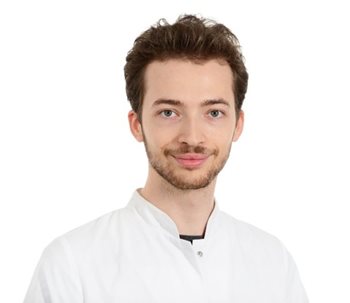
Nicolas Mühlschlegel
Department of Radiation Oncology
LMU University Hospital Munich
Munich, Germany
Email: Nicolas.Muehlschlegel@med.uni-muenchen.de
Social media: www.linkedin.com/in/nicolas-mühlschlegel-1ba427370