Report on the ESTRO Physics Workshop
23-24 October 2025
Toulouse, France

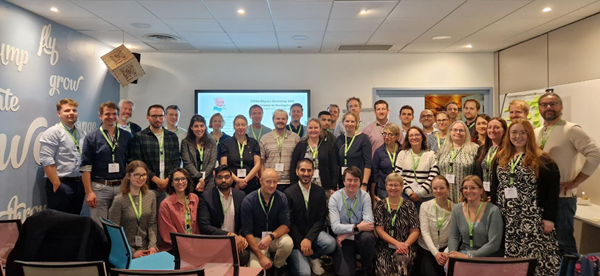
Toulouse, the rose-coloured city otherwise known for being the hometown of Airbus, played host to the 8th ESTRO Physics Workshop in October. The choice of venue was quite fitting, as radiotherapy shares many key values with the aviation industry. Keynote speaker Christophe Gabreau, software process expert at Airbus, underscored the commonalities between the two fields, especially in our focus on safety culture and quality control, but also in terms of well-planned, real-world implementation of cutting-edge technologies. This set the scene for an intensive two-day deep dive into five diverse hot topics in radiotherapy physics, of which this report covers one: value-driven adaptation in radiation oncology. This track was proposed and led by Lone Hoffmann, Ditte Sloth Møller (both from Aarhus University Hospital, Denmark), and Richard Canters (MAASTRO, The Netherlands), with supporting talks by Mette van Overeem Felter (Herlev Hospital, Denmark), Evert van Limbergen (MAASTRO), and Barbara Vanderstraeten (University of Gent, Belgium).
Off-line adaptive radiotherapy has been a state-of-the-art treatment strategy for many years, and is backed by ample evidence, both in-silico and in clinical outcomes. On top of this, newer technologies that enable online daily adaptations based on CT, cone beam CT (CBCT), or MRI are gaining traction worldwide. Adaptation comes at a cost, however, both in terms of expensive technology and added working hours for radiation therapists, physicists and oncologists. A question regarding the optimisation of the use of adaptations in radiotherapy thus arises: can we find a way to adapt a plan only when this adds sufficient value to the present treatment?
The first question posed to workshop participants was how to measure the added value of adaptation. Mette van Overeem Felter kicked off the discussion session with a presentation on how tumour control probability and normal tissue complication probability models can be used to quantify the possible added value during a treatment course, and how dose accumulation might be used to inform models and treatment decisions. The second session was introduced by Evert van Limbergen with a presentation on strategies to mitigate motion and deformations in organs-of-interest and targets, and which kinds of risk come both with motion, deformations, and the corresponding mitigation strategies. The third and final session of day one was focused on mapping out the cost of adaptive strategies. Barbara Vanderstraeten led with a presentation on the concept of value-based radiation oncology as utilised in ESTRO’s health economics in radiation oncology-value-based radiation oncology collaboration. Here, the term ‘value’ was defined for the following discussions as the ratio between health outcomes that (crucially) matter to patients and the cost of delivering these outcomes.
Between the invited talks, participants broke out into small groups to discuss the posed questions with regard to specific clinical scenarios. Among these were both off-line (head-and-neck, lung) and online (pelvic anatomies on MRI- or CBCT-based systems) treatments. To aid in the discussion sessions and engage the participants’ creativity, the organisers had prepared various tools. Risk assessment was facilitated by simultaneously placing LEGO figurines on printed risk matrices (see photo). Cost vs. value discussions were made more tangible by using a cost calculation web app that had been developed at Radboud University Medical Centre (The Netherlands) by Marike J. Ulehake et al. to visualise the relative cost of, e.g., standard long-course image-guided radiotherapy treatments to hypo-fractionated MRI-linac courses.
Day two of the workshop was focused on condensing the previous day’s discussions into possible tangible outcomes. Wishes for vendors were formulated and received by the present industry representatives, and participants voted on other possible forms of outcome dissemination. In the coming months, further online meetings will be held, and working groups will be established to bring these outcomes to reality. The work begun in Toulouse will thus continue and, we hope, contribute to the increased implementation of value-based adaptation in radiation oncology.
.png.aspx?width=350&height=232 "LEGO-(1).png")

Laura Patricia Kaplan, PhD
Department of Oncology and Palliative Care
Zealand University Hospital
Næstved, Denmark
Email: lakap@regionsjaelland.dk
LinkedIn: www.linkedin.com/in/laurapatriciakaplan