Date & Time : 17 June 2026 | 18:30–19:45 CEST | Online
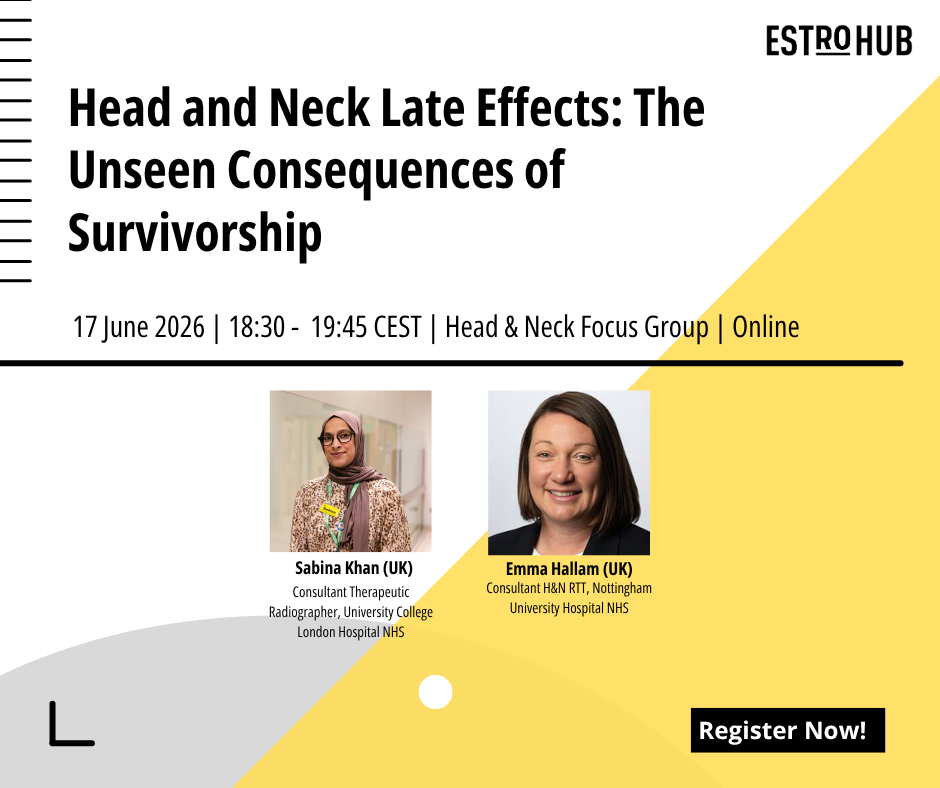
Head and Neck Late Effects: The Unseen Consequences of Survivorship
Advances in head and neck cancer treatment have transformed outcomes over the past several decades. Modern radiotherapy techniques such as IMRT, VMAT, and image‑guided approaches have dramatically improved the precision of treatment, reducing the volume of normal tissue exposed to radiation and contributing to higher cure rates. As a result, more patients are living longer after treatment than ever before.
With this success, however, comes a new challenge: the long‑term and late effects of therapy. As survival improves and patients live many years beyond their initial diagnosis, the likelihood of experiencing late effects increases. These consequences can affect swallowing, speech, dental health, endocrine function, and overall quality of life, often emerging months or even years after treatment has ended.
This webinar will explore the evolving landscape of head and neck cancer survivorship, focusing on the mechanisms, presentation, and impact of late effects. We will discuss how these issues influence daily functioning, long‑term wellbeing, and the support patients need as they navigate life after treatment. The session aims to equip clinicians with a deeper understanding of late effects and highlight strategies to anticipate, identify, and manage them effectively.
Chair
- Sabina Khan, Consultant Therapeutic Radiographer, University College London Hospital NHS (UK)
Speakers
- Sabina Khan, Consultant Therapeutic Radiographer, University College London Hospital NHS (UK)
- Emma Hallam, Consultant H&N RTT, Nottingham University Hospital NHS (UK)
Programme
18:30 – 18:50 | Introduction by Chair
18:50 – 19:20 | Beyond the Treatment Room: Unpacking the Causes and Mechanisms of Late Effects After Head and Neck Radiotherapy — Emma Hallam
19:20 – 19:40 | Living With the Lasting Impact of Radiotherapy Late Effects — Sabina Khan
19:40– 19:45 | Discussion and audience Q&A
Key Learning Objectives
1. Explain why late effects occur in head and neck cancer survivors and why they are particularly problematic in this population.
2. Identify the physical and functional challenges patients commonly experience, including symptoms that are frequently under-reported.
3. Discuss how multidisciplinary team involvement can improve long-term outcomes.
4. Explore current and emerging treatments for managing late effects.