.jpg.aspx?width=500&height=77 "ESTRO-2026_Banner-website_1034x160_PIC-(1).jpg")
The Physics Track at ESTRO 2026 will explore the latest innovations shaping radiation oncology—from artificial intelligence and adaptive radiotherapy to advances in particle therapy.
We spoke with Dr Cristina Garibaldi, Chair of the Physics Track and Deputy Director of the Unit of Radiation Research at the European Institute of Oncology in Milan, about the themes emerging from this year’s abstracts and the opportunities awaiting medical physicists in Stockholm.
Chair of the ESTRO 2026 Physics Track
What themes or challenges are dominating the physics abstracts this year?
Of more than 1200 received abstracts, a significant number are focused on the applications of artificial intelligence (AI) in the radiotherapy workflow, from autosegmentation to dose prediction, automated planning to prediction models. Special attention is given to uncertainty estimation, validation and quality assurance (QA) of AI models as well as their interpretability. Many abstracts are focused on how to optimise adaptive workflows, from enhanced image quality and improved synthetic CT generation, to real-time and dose-guided radiotherapy. New detectors and strategies are also proposed to address dose measurements and treatment verification challenges in advanced techniques such as real-time adaptive, particle and FLASH radiotherapy.
Particle therapy is increasingly coming into the spotlight; there are many innovations in online adaptive particle therapy and in improved robustness. Auditing and QA are also well represented, with many high-quality abstracts on multicentric initiatives to improve treatment quality.
Are there specific areas where international collaborations are making a noticeable impact?
Yes, international collaborations are making a noticeable impact in several key areas of medical physics, as they improve the sharing of expertise, lead to standardisation of best practices, and accelerate both research and clinical implementation globally. Two sessions on “Improving treatment quality through benchmarking and multicentric collaboration” and “Novel strategies and multicentric initiatives in QA: safer together” clearly highlight the importance of international collaborations in the development of dosimetry protocols for non-conventional beams, dosimetry audits to improve QA and ways to benchmark treatment quality. Some of the best-scored abstracts arose from initiatives that originated in ESTRO projects such as the annual ESTRO physics workshops, confirming that international collaborations are important to advance research and clinical best practice.
Moreover, multicentric collaboration may revolutionise patient management and improve outcomes by leveraging greater access to information that is derived from large, more representative real-world datasets to which advanced analytical techniques, including AI, can be applied. Medical physicists are crucial in the building of architecture that can enable the collection and storage of large findable, accessible, interoperable and reusable datasets of real-world data, as well as in the development of tools and guidelines that are used to validate prediction models, to promote fast integration of these models into clinical practice. We have dedicated two symposia to this important topic.
From this year’s abstracts, can you share any standout advancements or innovations in medical physics that will be showcased?
The programme is full of innovative works in all areas of medical physics, but the field with the greatest number of advancements is real-time and online adaptive radiotherapy. These advances are focused on workflow optimisation, which covers improved synthetic CT generation, automatic volume propagation, dose accumulation and the first experimental implementation of real-time dose-guided adaptive radiation therapy. Many innovations in real-time treatment verification improve clinical practice. We also see many advances in the field of particle therapy, especially in treatment verification, in the online adaptive field and in robustness, and these are evidence that the particle therapy community is continually growing.
What particular opportunities does the physics track offer to medical physicists at ESTRO 2026?
I believe the physics track offers a lot of opportunities to medical physicists. First of all, the conference theme “Innovating Radiation Oncology, Together”, which permeates throughout the physics track, emphasises the multidisciplinary nature of radiation therapy, in which medical physicists play a key role in developing and translating innovations into the clinic. We have created a programme in which we will analyse the potential alongside the challenges and risks associated with the most recent innovations in medical physics, in order to foster their clinical translation. We have focused attention on the implementation issues, so as to ensure that all research advances have a real impact on patient care. This is a valuable opportunity for medical physicists, not only to stay up-to-date with the latest innovations, but also to return home with ideas that can be directly implemented in clinical practice. They also have a chance to explore new areas in which they may have key roles in the future. New areas of research, such as physics modelling of biological effects, are opening up, thanks to the development of new treatment modalities such as FLASH radiotherapy and ion therapy. Furthermore, innovating radiation oncology through its combination with other oncological therapies, such as immunotherapy or targeted radionuclide therapy, poses a lot of challenges in modelling the synergic biological effects and the combined dosimetry.
How will the physics track at ESTRO 2026 explore AI’s role in AI guidelines and ways to improve confidence in AI-driven outcomes?
We have developed a programme that covers all aspects of AI, from theoretical models to AI/machine-learning (ML) applications, in each step of the radiotherapy treatment workflow: this means from imaging and autosegmentation through dose prediction and automatic planning to real-time treatment delivery and prediction models.
The potential and challenges of translating research results in the field of AI into clinical applications in radiotherapy, as well as practical aspects related to regulatory specifications for implementing AI-based software in clinical practice, will be discussed in dedicated symposia.
Given that AI/ML applications are now widespread in every area of medical physics, we have fully integrated them into the corresponding topic sessions, so that the whole community of medical physicists, including those with little expertise in AI, can benefit in the spirit of Innovating Radiation Oncology, Together. We have particularly focused on ways to estimate model uncertainties, model validation and interpretability in order to ensure ever greater integration into clinical practice.
Is there a particular aspect of this year's physics track that excites you personally?
What I particularly like about this track is that while considering the most advanced innovations in the field, such as real-time and online adaptive radiotherapy, quantum computing, biology-driven innovations and emerging trends in particle therapy, we have focused attention on implementation issues, to make sure that all research advances have a real impact on patient care. One example is the symposium on “Clinical use of AI: what has it brought us?”
Another aspect that excites me is that the track is notably modality-agnostic, and hence encourages cross-fertilisation among medical physicists’ communities with different expertise, with the aim of creating fruitful exchanges of experiences and ideas. An example is the pitch session on “No therapy is an island: cross-fertilisation between photon and particle communities”.
>To celebrate the 20th anniversary of the ESTRO School, we have dedicated a symposium to the memory of Professor Ben Mijnheer. This is called “From point detectors to modern in vivo dosimetry” and will pay tribute to his legacy in medical physics, in both science development and education.
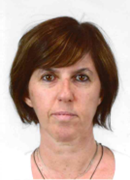
Dr Cristina Garibaldi
Deputy director, Unit of Radiation Research, European Institute of Oncology, Milan, Italy