.jpg.aspx?width=500&height=77 "ESTRO-2026_Banner-website_1034x160_PIC-(1).jpg")
As we prepare for ESTRO 2026, we are pleased to share exclusive insights from the track chairs who help shape the scientific and educational programme. In this interview, the Co-Chairs of the Interdisciplinary Track highlight the importance of collaboration across disciplines, share key themes and innovations, and offer a preview of what participants can expect in Stockholm.
Professor Matthias Guckenberger and Professor Barbara Jereczek-Fossa are Co-Chairs of the ESTRO 2026 Interdisciplinary Track.
Professor Matthias Guckenberger serves as Chairman of Radiation Oncology at the University Hospital Zurich and the University of Zurich, Switzerland. Professor Barbara Jereczek-Fossa is based at the European Institute of Oncology and the University of Milan, Italy. Together, they bring extensive expertise and a strong commitment to interdisciplinary collaboration to shape this year’s programme.
Chair of the ESTRO 2026 Interdisciplinary Track
What makes the interdisciplinary track a key pillar of the ESTRO 2026 programme?
Quality in radiation oncology research and practice is strong, and depends on a deep understanding of interdisciplinary collaboration. The interdisciplinary track brings research that is at a crossroads among disciplines together, integrates the needs of our patients and society, and thereby advances radiation oncology and cancer care as a whole.
Why is an interdisciplinary approach essential for advancing radiation oncology today?
An interdisciplinary approach is essential because it converges discipline-specific expertise from a generic tool into a personalised, high-precision therapy, to optimise cancer care at the individual patient, regional and global levels.
Are there any specific sessions, themes, or formats in this year’s interdisciplinary track that you are particularly excited about?
The number of abstract submissions to the interdisciplinary track has grown by a factor of four within the last five years, and the quality of research in this track is exceptionally high. I am excited about the sessions on how artificial intelligence (AI) will advance radiation oncology and how access to optimal radiation oncology can be safeguarded at the individual and global levels.
How does the interdisciplinary track help participants gain new perspectives and strengthen cooperation across disciplines and institutions?
The interdisciplinary track provides multiple perspectives – technology, biology and patient-centred practice - and converges them to advance radiation oncology. The aim is to support participants of all disciplines to arrange the puzzle pieces such that they fit into a picture that takes into account individual, local environments at their home institutions.
How has the patient voice been incorporated into the programme, and why is it important for our community to hear of their experiences?
ESTRO 2026 in Stockholm is focused on the active involvement of patients and patient advocates in the programme. The interdisciplinary track aims to advance radiation oncology research and practice by collaborating with patients as equal partners.
Barbara Jereczek-Fossa: Oncology and radiation oncology require teamwork, and the annual ESTRO congress reflects this spirit, bringing together different disciplines, perspectives, and expertise to improve patient care.
.jpg.aspx?width=250&height=250 "image-(37).jpg")
Professor Matthias Guckenberger, University Hospital Zurich and University of Zurich, Switzerland
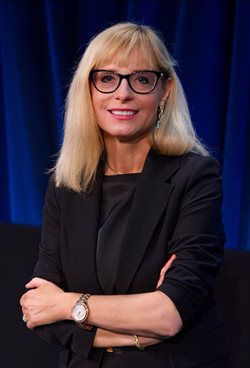
Professor Barbara Jereczek-Fossa, European Institute of Oncology and University of Milan, Italy