.jpg.aspx?width=500&height=77 "ESTRO-2026_Banner-website_1034x160_PIC-(1).jpg")
The Early Career Track at ESTRO 2026 is designed to support the next generation of professionals in radiation oncology—focusing on career development, collaboration, and building meaningful connections across the community.
We spoke with Azadeh Abravan and Pierre Montay-Gruel, Chairs of the Early Career Track, about what makes this programme a unique opportunity for early-career professionals joining the congress in Stockholm.
Chairs of the ESTRO 2026 Early Career Track
What makes the Early Career Track a standout opportunity for early-career professionals at ESTRO 2026?
The early career (EC) track is designed to address the challenges EC professionals face and the opportunities they encounter in radiation oncology, including leadership, collaboration, networking, and EDI. With this year’s theme, “Innovating Radiation Oncology, Together”, we aim to emphasise innovation and connection at all levels of our programme. EC ESTRO members can attend sessions on topics important to their careers while actively participating and connecting with peers in this special environment.
How does the early-career track address the evolving needs of the next generation in radiation oncology, including in aspects like career development?
The EC committee tries to stay aware of the next generation’s needs, and our programme reflects this through sessions on training and education, interdisciplinary collaboration, telemedicine and global cancer care, science communication, and interactive networking formats that support career development.
What advice would you give to young professionals attending ESTRO for the first time?
The ESTRO congress offers important opportunities for EC professionals to expand their professional networks and remain at the forefront of radiation oncology by exploring the latest scientific advancements. For first-time attendees, the experience can feel overwhelming, but with some preparation, it can be truly rewarding. We strongly encourage newcomers to sign up for the EC buddy system, which pairs first-time attendees with returning members to help them navigate the meeting. We also highly recommend joining the EC track, in particular the EC speed dating session, which offers a valuable chance to meet a wide range of peers. This year, each visitor to the track will receive a welcome package, prepared by the EC committee, which provides useful information to help them start their ESTRO journey with confidence.
Are there any special features or sessions in this year’s early-career track that you’re especially excited about?
Together with our amazing SAG members, we have designed an exciting programme and hope that every session will find its audience and spark interest among our EC members.
Pierre: I’m especially looking forward to the panel discussion, which will bring together radiation oncology professionals and cancer patients for an open dialogue. These conversations are always profoundly enriching, because listening to patients’ voices and descriptions of lived experiences not only deepens our understanding of the real-world impact of our work but also reminds us of the human dimension behind every scientific advance.
Azadeh: All sessions feel close to my heart, but I am particularly excited about the teaching lecture. Having the ESTRO president-elect and the chair of the Scientific Council join us for “Shaping tomorrow’s training, together” reflects our ambition to build a more connected and collaborative future for radiation oncology. I am also very enthusiastic about the focus on global collaboration and digital innovation, especially through the session on telemedicine and global cancer care, as well as the emphasis on science communication, which offers insights into essential skills that will help to ensure real-world impact.
How does the early-career track foster collaboration and networking among early-career professionals from different backgrounds and countries?
Diversity and inclusion are essential aspects of our work. When we design the EC track, we really try to include all backgrounds and countries, especially by avoiding topics that are too specific or centred around a limited number of regions. In this way, we hope to gather members with diverse backgrounds who will feel engaged by the sessions.
Acknowledgement
We would like to warmly acknowledge the hard work, enthusiasm, and creativity of all SAG members who contributed to shaping this year’s EC track. It was truly a collective effort, and we hope that together we have created something impactful.
EC track SAG members 2026:
Jenny Bertholet, Sandra Classen, Laia Humbert Vidan, Naman Julka-Anderson, Federico Mastroleo
Daan Nevens, Lisette Juul Sandt, Andrada Turcas, Miet Vandemaele, Eliana Vasquez Osorio
Do you want to stay connected with the EC committee? Join our LinkedIn group!
Chairs of the ESTRO 2026 Early Career Track

Azadeh Abravan
University of Edinburgh / University of Manchester, UK | LinkedIn
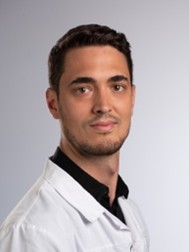
Pierre Montay-Gruel
University of Antwerp, Iridium Netwerk, Belgium | LinkedIn