.jpg.aspx?width=500&height=77 "ESTRO-2026_Banner-website_1034x160_PIC-(1).jpg")
Ahead of ESTRO 2026, we asked Professor Dr Frank-André Siebert, Chair of the Brachytherapy Track, to share his insights on emerging trends, key clinical trials and developments shaping this year’s brachytherapy programme.
Chair of the ESTRO 2026 Brachytherapy Track
What trends emerge in the brachytherapy-related research that has been submitted for ESTRO 2026?
This year's ESTRO congress will be very exciting for anyone interested in brachytherapy! In addition to ongoing developments in key areas of brachytherapy such as gynaecology, prostate, breast, head-&-neck, and gastrointestinal, this year we have several excellent abstracts of studies in which the results of the use of brachytherapy are compared with those for other treatment options, in particular stereotactic body radiation therapy (SBRT) and proton therapy. They demonstrate the very good results of the use of brachytherapy and the need for careful patient selection. There are also many descriptions of methods that can be used to speed up brachytherapy processes, through technical developments with auto-segmentation, catheter reconstruction or reductions in the number of brachytherapy treatment fractions.
Are clinical trials a prominent focus in this year’s brachytherapy programme?
As is typical for brachytherapy, some promising clinical-trial studies are presented. We have the SCOTCH (phase II) trial, which is investigating whether the addition of chlorophyllin to neoadjuvant chemoradiotherapy can reduce gastrointestinal/genitourinary toxicities in locally advanced rectal cancer. The DERUP-RC study is testing whether the use of a brachytherapy boost can improve clinical response without increasing toxicity. The MRI-guided brachytherapy dose escalation shows significant down-staging of the tumour, thereby enabling organ preservation.
Studies in breast brachytherapy are of great interest and a highlight of this year’s brachytherapy programme. Noteworthy results regarding the use of very accelerated partial breast irradiation will be presented. One study shows, in its five-year outcome data, that a one-to-four fraction scheme provides excellent oncological outcomes with very few toxicities for one- or two-day regimens. Also, the 10-year results of the SiFEBI prospective phase II trial will be presented, with the use of interstitial brachytherapy in a single fraction of 16Gy.
What advancements or breakthroughs in brachytherapy research should attendees look out for?
My suggestion is to keep an eye on the aforementioned trials. In addition, the results of comparisons of treatment with either brachytherapy or SBRT for prostate cancer will be eye-catching. A large retrospective investigation of data collected from 1995 to 2018 shows that the use of either protons or Ruthenium plaque brachytherapy to treat uveal melanoma produces similar results.
The use of artificial intelligence (AI) continues to advance in brachytherapy. Methods for using AI in organ and catheter segmentation are an important part of the brachytherapy physics track. Treatment planning in brachytherapy is also developing rapidly, and biological models and robust treatment planning will be presented this year.
What makes the brachytherapy sessions indispensable for radiation oncology professionals?
A new type of symposium is being introduced, with the title ‘The Best of Brachytherapy’, which will present the absolute highlights of brachytherapy in recent years. This provides a perfect, concise overview of the latest achievements in brachytherapy.
Brachytherapy is a patient-centred treatment; clinicians decide on the therapy with the patient. Making decisions with patients and their representatives in the light of improving clinical outcomes will be discussed in a symposium.
A clinical study is one thing; to implement the result of a study in the clinic is another. We will offer a teaching lecture on how to integrate the important EMBRACE-II results into clinical practice. Furthermore, we expect a lively debate on organ preservation in rectal cancer with brachytherapy as an important treatment modality. I think that participants will be able to take many practical tips back to their clinics this year.
How do you see brachytherapy evolving in the next few years, based on this year's abstracts?
The results of the presented studies will have positive impacts on patient treatment in the clinics. Another important aspect is workflow optimisation. Some brachytherapy procedures are time-consuming, and there is room for improvement in terms of speeding up the procedures without compromising quality.
The abstracts also show improvements in quality assurance of brachytherapy, such as through the use of electromagnetic tracking or dose verification by a flat-panel detector. Robust optimisation of treatment plans and the use of AI will increasingly find their way into clinical practice.
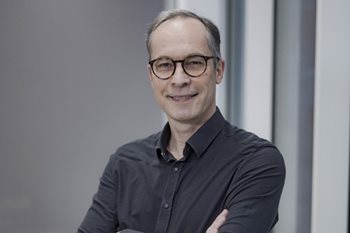
Professor Dr Frank-André Siebert
Clinic of Radiotherapy, UKSH – Campus Kiel, Germany
Chair, ESTRO 2026 Brachytherapy Track